
Mounjaro has rapidly gained attention as one of the most effective medications for significant weight loss and diabetes management.
Its active ingredient, tirzepatide, targets key hormones that regulate appetite and blood sugar, helping users lose a remarkable amount of weight. But what happens when someone stops taking it? This is where the conversation turns serious.
Many people experience noticeable weight regain after discontinuing Mounjaro a challenge rooted not in failure, but in how the body naturally reacts when the medication support is removed.
Clinical trials and real-world data both show that hunger levels increase, metabolism slows, and old weight patterns can return once the treatment ends.
Understanding why this happens is critical for anyone using or considering Mounjaro, especially those planning to stop it. The goal isn’t just to lose weight — it’s to maintain it safely and sustainably.
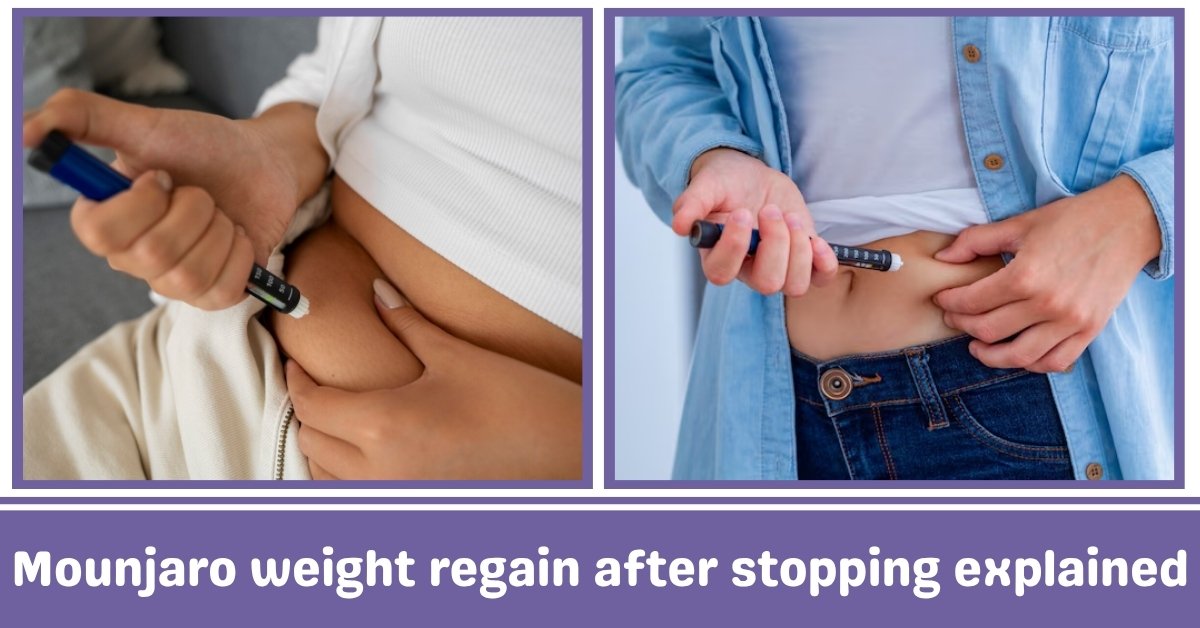
Mounjaro weight regain after stopping explained
In this guide, we will explain why weight regain happens after stopping Mounjaro, what the data shows, and how you can minimize the risk of gaining it back.
What the trials show about stopping Mounjaro
When people use Mounjaro (tirzepatide), they experience strong weight reduction because the drug directly affects hunger, digestion speed, and blood sugar control. But once they stop taking it, the body begins to shift back to its original patterns.
Clinical research consistently shows that a significant amount of the lost weight returns after discontinuation. This doesn’t mean the medication “fails” it simply means that the effect only lasts while the drug is active in the body.
Once treatment stops, the appetite-suppressing and metabolism-boosting benefits decline. As a result, calorie intake often increases again, and energy expenditure decreases.
Many users report noticeable weight regain within a few months of stopping, and this can continue gradually over time. The trend is clear: when Mounjaro is stopped, the body attempts to return to its prior weight balance.
The data consistently indicates that maintaining results requires ongoing treatment or strong lifestyle adjustments. This is why Mounjaro is considered a long-term therapy rather than a short-term fix.
Why does weight come back when stopping?
Weight regain after stopping Mounjaro happens because the body’s internal system for hunger, fullness, and energy storage resets itself once the medication is removed.
During treatment, Mounjaro mimics natural gut hormones that tell the brain you are full and slow down how quickly your stomach empties. This makes it easier to eat less and feel satisfied.
When you stop taking it, these hormone levels return to their natural state, and hunger signals become stronger again. Your stomach empties faster, you feel hungry sooner, and cravings start to reappear.
In addition to appetite returning, metabolism also adjusts downward. When a person loses a large amount of weight, their body becomes more energy-efficient meaning it burns fewer calories even at rest.
So when you stop Mounjaro and start eating more, the body stores excess calories more easily. This is a biological survival mechanism, not a personal failure. It’s the body’s way of protecting itself against perceived starvation.
Without medication or a strict lifestyle plan to balance this shift, most people naturally regain some or all of the weight they lost.
The takeaway is simple: stopping Mounjaro removes the chemical support that helped control hunger and food intake, and unless strong habits are in place, the body will respond by regaining weight.
How much weight regain are we talking about?
While the exact amount varies by individual, a clear pattern appears: people often regain a noticeable portion of the weight lost within months of stopping Mounjaro.
For some, it may be a few kilograms; for others, it can be most of the original weight loss. On average, studies and patient reports suggest that individuals may regain about half of what they lost within the first year of discontinuation.
This happens gradually first through small, steady increases, then stabilizing once the body finds its new set point.
It’s also common for users who stopped Mounjaro without a transition plan to see faster regain compared to those who implemented a structured maintenance strategy.
If the drug was used for six months or a year, stopping suddenly without gradual dose reduction or lifestyle reinforcement can make the body rebound more quickly.
This happens because the body’s appetite hormones and metabolism haven’t yet adapted to the new weight naturally.
In short, while the degree of regain differs from person to person, it’s realistic to expect that without continued medical or behavioral support, a large percentage of the lost weight can return.
What this means in real-world terms
In the real world, stopping Mounjaro isn’t just a medical decision it’s a lifestyle shift. People who rely on the medication for appetite control often underestimate how much it helped them maintain smaller portions and reduce cravings.
Once off the drug, those habits are challenged daily by increased hunger and less motivation to stay strict with eating plans. This can be frustrating and emotionally draining because the weight often creeps back slowly, making it feel like progress is slipping away.
For many users, this situation reinforces the understanding that obesity and weight management are chronic conditions, not temporary ones. Just like blood pressure or diabetes, weight regulation may require ongoing treatment or lifelong adjustments.
It’s important to approach Mounjaro as one part of a larger management plan not a cure. This means building sustainable eating and exercise habits while on the medication so that when you do stop, the foundation for maintenance already exists.
The key message is that success doesn’t end when the medication ends; it continues only if you actively work to preserve it. In the real world, weight maintenance after stopping Mounjaro requires structure, accountability, and consistent follow-through.
What to do to minimise regain risk
Preventing or reducing weight regain after stopping Mounjaro is possible, but it requires deliberate action. The most effective step is to prepare before discontinuing the drug.
Start by strengthening your nutrition habits focus on balanced meals with lean protein, fiber, and healthy fats that promote fullness. Avoid returning to old eating patterns and plan meals that match your reduced calorie needs.
Consistent physical activity also plays a major role. Strength training helps preserve muscle mass, which keeps your metabolism more active even when medication support ends. Adding regular cardio improves calorie burn and helps balance energy intake.
Behavioral support is equally critical. Keeping a food diary, tracking weight weekly, and staying connected with a dietitian or healthcare provider can help you stay accountable.
If you notice small regains early, respond quickly rather than ignoring them. It’s easier to manage a two-kilogram gain than to fix a twenty-kilogram rebound.
Also, discuss with your doctor whether tapering off gradually instead of stopping suddenly might help. For some, continuing a lower maintenance dose or switching to another treatment option can make the transition smoother.
Finally, recognize that the goal after Mounjaro isn’t perfection it’s management. Even if some weight returns, maintaining a portion of your initial loss still offers significant health benefits.
Improved blood sugar levels, lower blood pressure, and better mobility often remain even after partial regain. The focus should be long-term health, not short-term numbers.
With planning, discipline, and the right mindset, you can greatly reduce the risk of full weight regain and maintain meaningful results long after stopping Mounjaro.
Conclusion
Mounjaro has proven to be one of the most effective medical tools for weight management, but it’s not a permanent solution on its own. Once the medication is stopped, the body naturally begins to reverse many of the processes that supported weight loss.
Hunger returns, metabolism slows, and weight often creeps back not because of failure, but because of biology. The key to lasting success is understanding that obesity is a chronic, long-term condition that requires ongoing management.
Stopping Mounjaro should never be done without a clear maintenance plan. Building sustainable habits in nutrition, exercise, and behavior while on treatment is essential to prevent major rebound once it ends.
It’s also important to stay in contact with a healthcare professional to monitor progress and make necessary adjustments. While some regain may be unavoidable, the right strategy can preserve a large portion of your results and continue improving health markers.
In short, Mounjaro works but maintaining its benefits requires commitment beyond the prescription. With awareness, consistency, and preparation, you can manage your weight effectively even after stopping the medication.